THE LATEST FROM TIM SPYKSTRA:
To The Place Where I Belong
A 31-Day Devotional on John 13-17
THE LATEST FROM TIM SPYKSTRA:
To The Place Where I Belong
A 31-Day Devotional on John 13-17


A 31-Day Devotional on John 13-17
A 31-Day Devotional on John 13-17

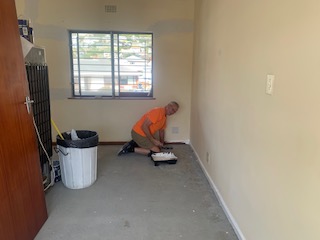
It has been a busy season here on the Ocean Retreat Center campus with both a work crew and Kingdom Encounter team of middle school students from Holland Christian. The days have been filled with lots of activity and energy.
One of the construction projects has been a much needed remodel on the building. Carpets ripped out, walls knocked down, cracks patched and other repairs that inevitably show up with such an endeavor.
Before you can get to the good stuff of remodeling you have to do the hard work of demolition and removal. And this first phase is messy. One of the rooms was filled with a cloud of concrete dust which set off the fire alarm several times.
In the midst of the reconstruction chaos I thought about how this is what happens in our spiritual journey as well. As the Holy Spirit works in our lives forming us into “God’s spiritual house” there always seems to be a season of demolition, removal, and maybe even an alarm or two set off.
The Apostle Peter describes this on going process in 1 Peter 2:1-12. If we are to be a “spiritual house” a “holy priesthood” which radiates the glory of our Father and His Son Jesus, old sinful patterns must continually be removed.
Peter says, the Holy Spirit comes in like a burning torch to remove all the old junk in our hearts (1Peter 1:7). Things such as: our pride, selfishness, hypocrisy, jealously, perverted thoughts and actions, fears, unforgiveness etc.
I don’t particularly like this phase of a building project. It is messy. It hurts. But it is necessary in order to be built up into the image of Christ. Yes, it can be painful, but it is one of the most loving works the Father can do in our hearts. He is constructing a beautiful home of shalom right in the middle of our hearts.
This past Sunday we were blessed to witness the powerful “building work” of the Holy Spirit in the lives of the students who have been on the Oceans trip. Pastor Raymond asked if one or two students could share about their experience in South Africa. Unsure how middle school students would respond, we wondered if anyone would be brave enough to share. However the opposite was true! What a blessing that so students could articulate with fellow believers how the Lord was working in their lives!
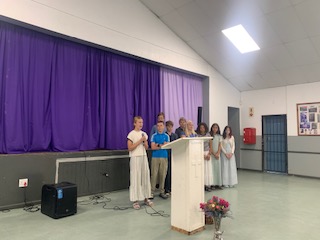
Back at the Retreat Center, students shared with one another and the leaders what they would “take away” and bring back home with them. It was evident that the Holy Spirit was at work: removing fears, worries, perceptions and sins. The presence of Jesus radiated from hearts. It truly was a holy moment.
Their softened hearts convicted me to pray for the Holy Spirit to keep working in the hard places in my heart. So that I can continue to reflect Jesus the Cornerstone, who makes His spiritual home in my heart.
Perhaps today is the day the Holy Spirits wants to begin a remodeling work in your heart. I challenge you to invite the Refiner Fire in. Trust that His love will do a beautiful work. Remember it may hurt for a bit. It may be messy. BUT it will birth a more glorious grace of Christ in you.